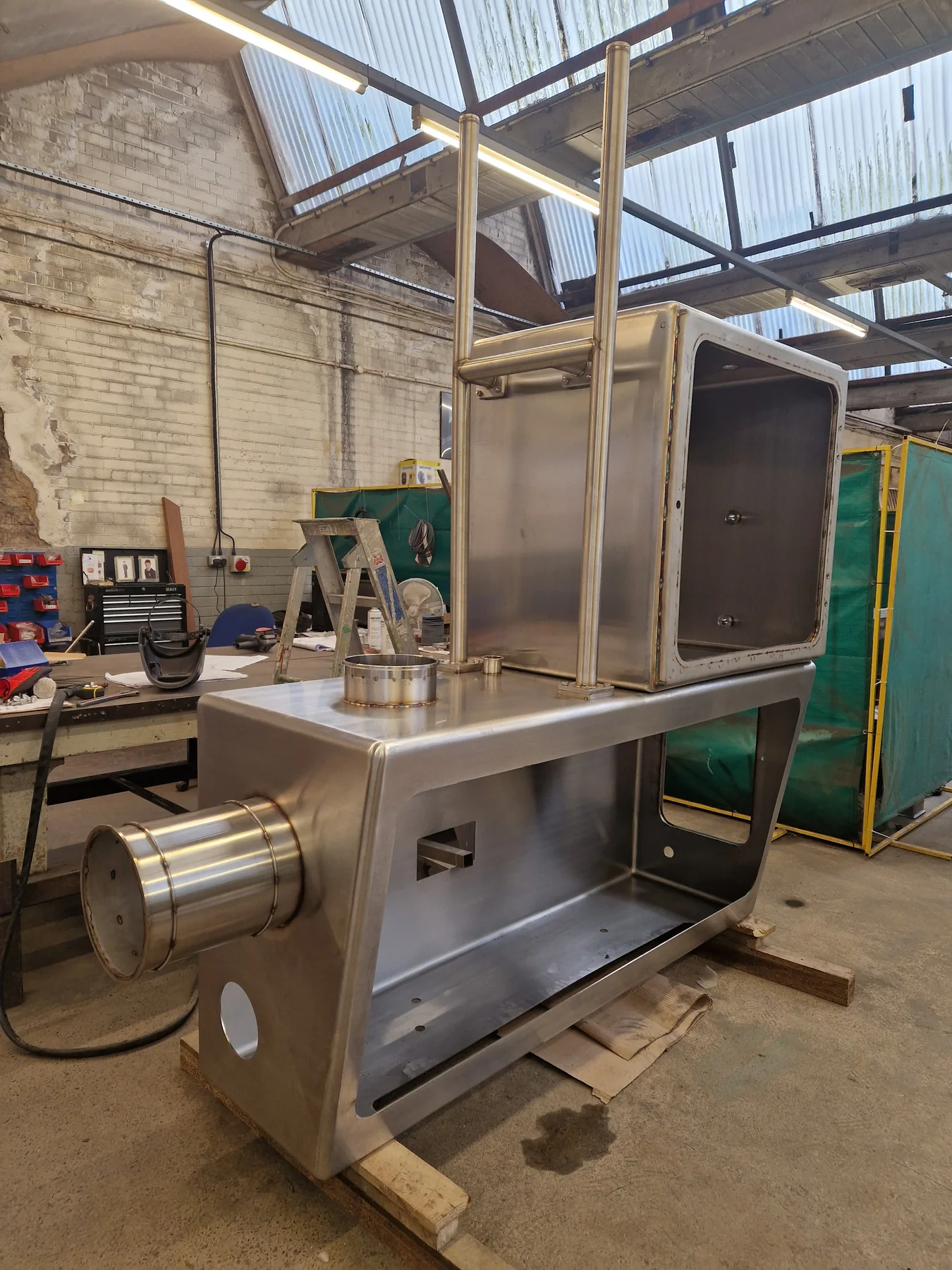
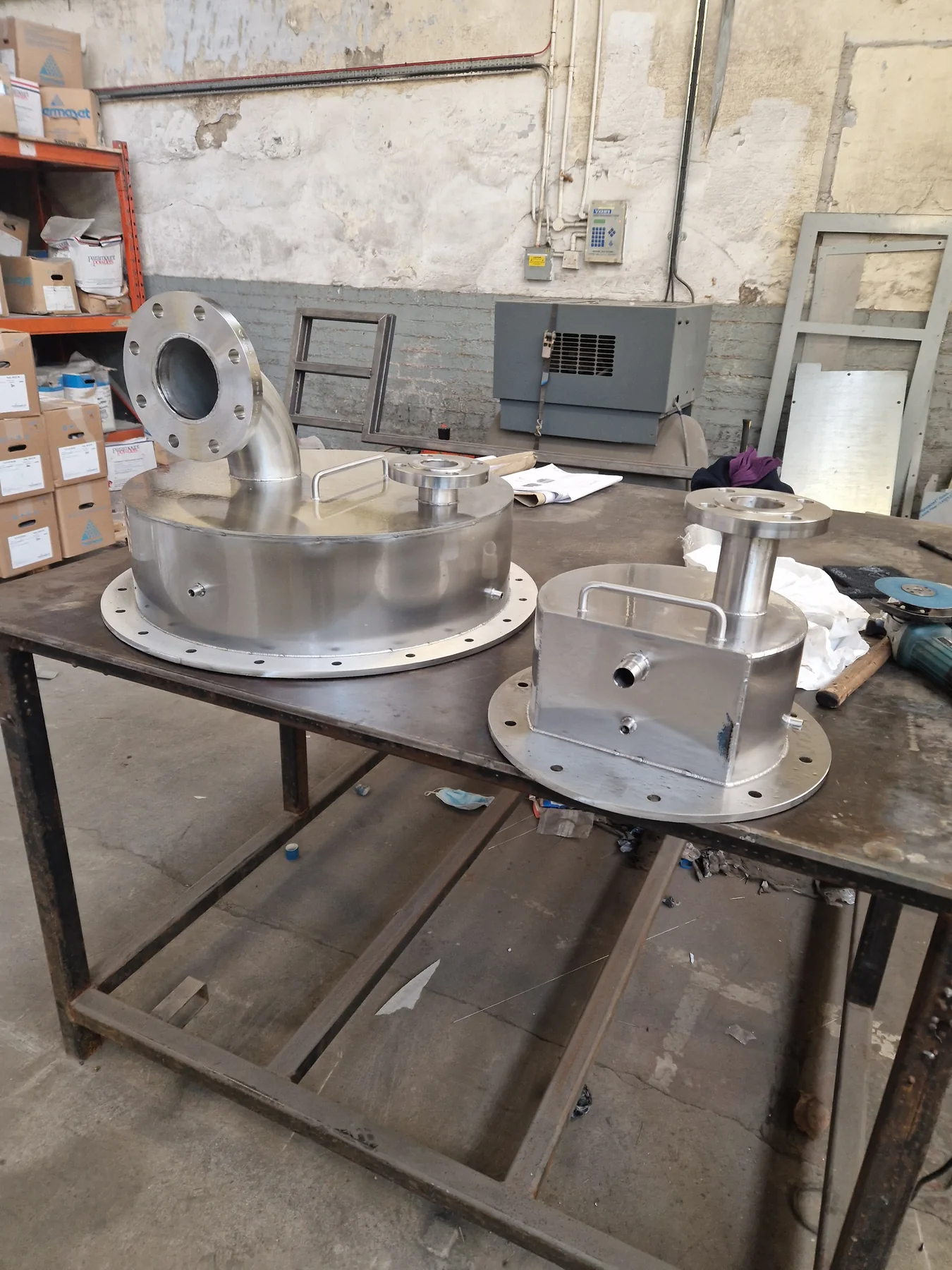
The short answer: 304 is the general-purpose choice; 316 is for tougher corrosion exposure
For many indoor and general engineering fabrications, 304 stainless steel is a sensible starting point. 316 contains molybdenum and is normally selected where the finished component needs stronger resistance to chloride attack or more aggressive service conditions. That distinction matters around coastal exposure, salt, some cleaning regimes and certain process environments.
But grade choice should be made from the actual duty of the part. A bracket inside a dry production area has a very different requirement from a fabricated guard exposed to salt spray or a vessel component used in a chloride-bearing process.
What do 304 and 316 actually mean?
Both are austenitic stainless steels and both are commonly formed, cut and welded. Their corrosion resistance comes primarily from chromium, which allows a protective passive film to form on the surface. 316 also contains molybdenum, which improves resistance to localised corrosion in chloride-containing environments.
The British Stainless Steel Association (BSSA) treats grade selection, fabrication practice and surface condition as linked issues. A good stainless fabrication is therefore not just a question of ordering the correct sheet: handling, welding and finishing can all affect the final result.
When 304 stainless steel is often appropriate
- General indoor engineering and machinery components
- Fabricated covers, trays, brackets and guards
- Food or clean-looking equipment where the actual chemical exposure is compatible
- Architectural or visible components in non-marine environments
- Projects where the specification calls for 304 or its low-carbon welding variant
304 is widely available, formable and weldable. That combination makes it a common material for sheet-metal fabrication. It should not, however, be treated as a universal “stainless equals no rust” solution. Exposure matters.
When 316 stainless steel may be the better choice
- Coastal or marine exposure
- Components regularly exposed to road salt or chloride contamination
- Some food, pharmaceutical and chemical-process duties
- External parts in more aggressive environments
- Projects where the customer specification specifically requires 316
316 is usually more expensive than 304, so specifying it automatically can add unnecessary material cost. Conversely, choosing 304 purely to reduce cost can be false economy if the service environment really needs the extra corrosion resistance of 316.
What are 304L and 316L?
The “L” denotes a lower carbon version of the grade. Low-carbon grades are commonly specified for welded fabrications because they reduce the risk of sensitisation in the heat-affected zone. If a drawing calls for 304L or 316L, that designation should be kept with the manufacturing information rather than shortened casually to “304” or “316”.
Does 316 make a fabrication stronger?
Do not choose between 304 and 316 on a vague assumption that 316 is simply the “stronger” grade. For most fabricated sheet-metal enquiries, the decisive questions are service environment, corrosion resistance, geometry, thickness, loading and the engineering specification. Structural strength and suitability have to be considered from the actual design.
Grade choice also affects welding and finishing
Stainless TIG welding, post-weld dressing and the final visible finish should be considered with the material grade. Weld heat tint, grinding marks, contaminated abrasives or cross-contamination from carbon steel can undermine the appearance and, in some situations, the corrosion performance of stainless work.
BSSA guidance specifically warns against iron contamination during storage, handling and fabrication. Mixed-metal workshops need sensible segregation and clean tooling practices so carbon-steel debris is not embedded into stainless surfaces.
What if the component needs to be brushed, satin or polished?
State the required finish on the enquiry. “Polished stainless” is not a precise manufacturing specification on its own. Brushed, dull polished, satin and bright polished finishes can differ materially in appearance and surface roughness. If appearance is important, identify the visible faces and provide a reference sample or clear close-up photograph where possible.
The grade can also matter when a high-quality bright finish is required. This is another reason to define grade and finish together instead of treating polishing as an afterthought.
304 vs 316: practical comparison for a buyer
| Question | 304 | 316 |
|---|---|---|
| General indoor fabrication | Often suitable | May be unnecessary unless specified |
| Chloride / salt exposure | More vulnerable | Normally better resistance |
| Welded fabrication | Common; 304L may be specified | Common; 316L may be specified |
| Brushed / polished finish | Common | Common |
| Material cost | Usually lower | Usually higher |
| Best decision basis | Actual service environment and drawing/specification | |
What to send Zeus if you are unsure which grade is required
- Drawing or sketch
- Where the component will be installed
- Indoor or outdoor use
- Any salt, chemical, cleaning or process exposure
- Material thickness if known
- Weld and finish requirements
- Quantity
- Delivery postcode and required date
Zeus can discuss manufacturability and quotation requirements, but material selection for safety-critical, regulated or specialist corrosion duties should remain under the control of the responsible designer or engineer.
Sources and further technical reading
Technical background for this guide was checked against the British Stainless Steel Association, including its guidance on stainless grades, fabrication, welding and surface finish, and against UK stainless stockholder information on the differences between 304 and 316.
Frequently asked questions
Is 316 stainless steel always better than 304?
No. 316 normally gives better chloride corrosion resistance, but it costs more and may be unnecessary for many indoor or general engineering applications. Choose from the actual service environment and specification.
Can Zeus fabricate both 304 and 316 stainless steel?
Zeus quotes stainless fabrication from the customer requirement. Send the drawing, grade if specified, thickness, quantity, weld details and finish so the complete job can be reviewed.
Should I specify 304L or 316L for welding?
Low-carbon L grades are commonly used for welded stainless fabrications, but the grade should follow the responsible design or customer specification rather than being changed at quotation stage without agreement.
Have a fabrication to price?
If this guide relates to a live job, send the drawing, material, thickness, quantity, finish, delivery postcode and required date. Zeus can then review the actual manufacturing requirement.
Send us your drawing