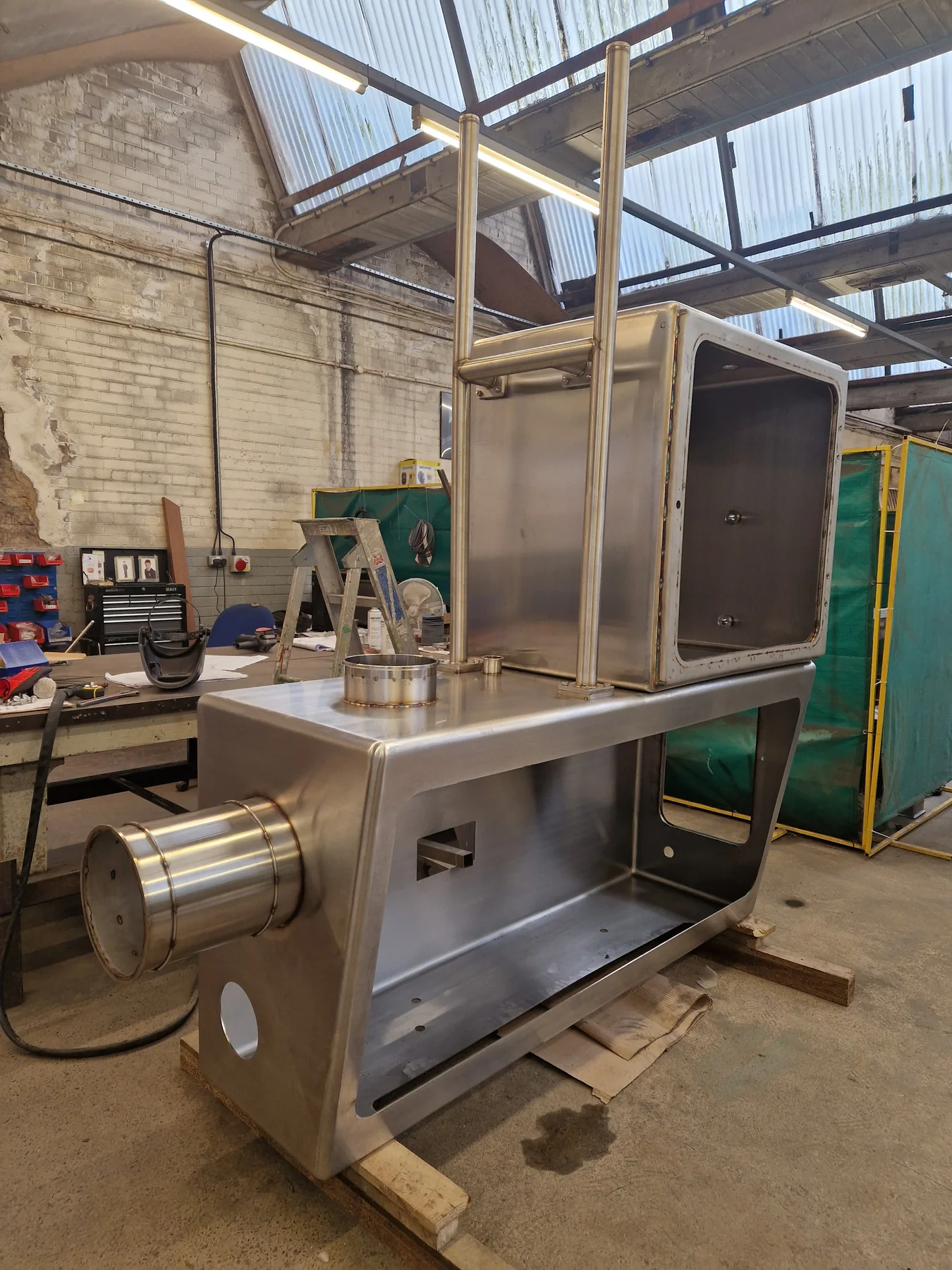
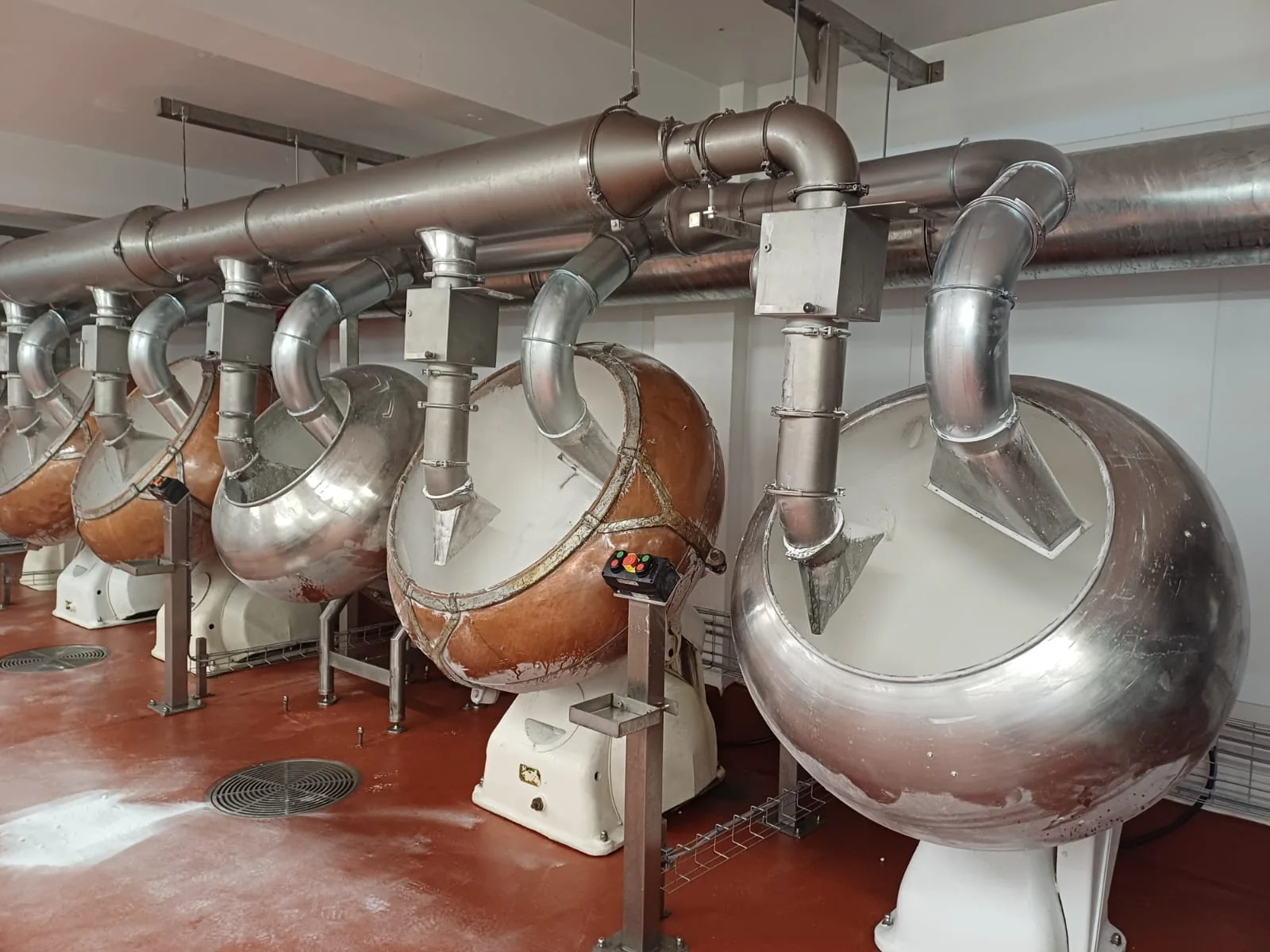
Stainless finishing planned with the fabrication
On stainless fabrication, the final surface can be just as important as the formed shape and TIG-welded joints. Brushed, satin and polished finishes should be defined early so weld position, access, grain direction, dressing and handling can be planned around the finished component.
The finish should be considered before fabrication begins rather than added as an afterthought. Weld position, access, handling and the direction of visible grain can all affect how a finished component should be planned.
Different jobs need different finishes
Terms such as brushed, satin and mirror polished describe noticeably different appearances. If a finish needs to match existing equipment, a reference photograph or physical sample is extremely useful. If there is a specified surface finish on the drawing, include that information with the enquiry.
The genuine Zeus project photography includes highly reflective conical work, vessel-style assemblies and polished tubular fabrication, showing how much the finish contributes to the appearance of the completed item.
Brushed, satin and polished stainless steel
Zeus has particular strength in stainless polishing and finishing. If a new component must match existing stainless equipment, send close-up reference photographs or a sample and identify which faces will remain visible after installation. Where a drawing specifies a finish, include the complete requirement with the fabrication enquiry.
Polishing welded fabrications
Where a welded joint will remain visible, the fabrication and polishing stages need to work together. Tell Zeus which faces will be seen, whether welds are to remain visible or dressed, and whether particular areas must match an existing finish.
What to send for a polishing quote
- Drawing or photographs of the component
- Material if known
- Required finish or reference image
- Areas that will be visible
- Quantity
- Any welding or fabrication still required
- Packaging or handling considerations if the surface is easily marked
If you are unsure how to describe the finish, photographs are often more useful than trying to find the perfect technical term. Send a close-up of the appearance you want and explain where the finished part will be used.
See genuine Zeus fabrication
The photographs below show work fabricated by Zeus. They give a practical indication of the type, finish and scale of work customers can discuss when sending a new enquiry.
Real project evidence: See polished tubular work and fabricated details, polished and formed conical work, large conical fabrication sequence. These project pages describe only what the photographs and established Zeus information support.
Frequently asked questions
What is the difference between brushed, satin and mirror finishes?
They describe different levels and patterns of surface finish, from directional brushed or satin appearances to a much more reflective polished surface. A reference sample or photograph is useful when appearance is critical.
Should polishing be specified before fabrication?
Yes. Stating the finish early helps the fabrication, welding and handling stages account for the final appearance.
Can I send a photograph of the finish I want?
Yes. A clear reference photograph or sample can be very useful when the job needs to match an existing appearance.
Send the job for a quote
Send your drawing, quantity, material if known, finish requirement and delivery postcode. If you do not have a drawing, attach photographs and describe what you need the component to do.
Send us your drawing