What is stainless weld heat tint?
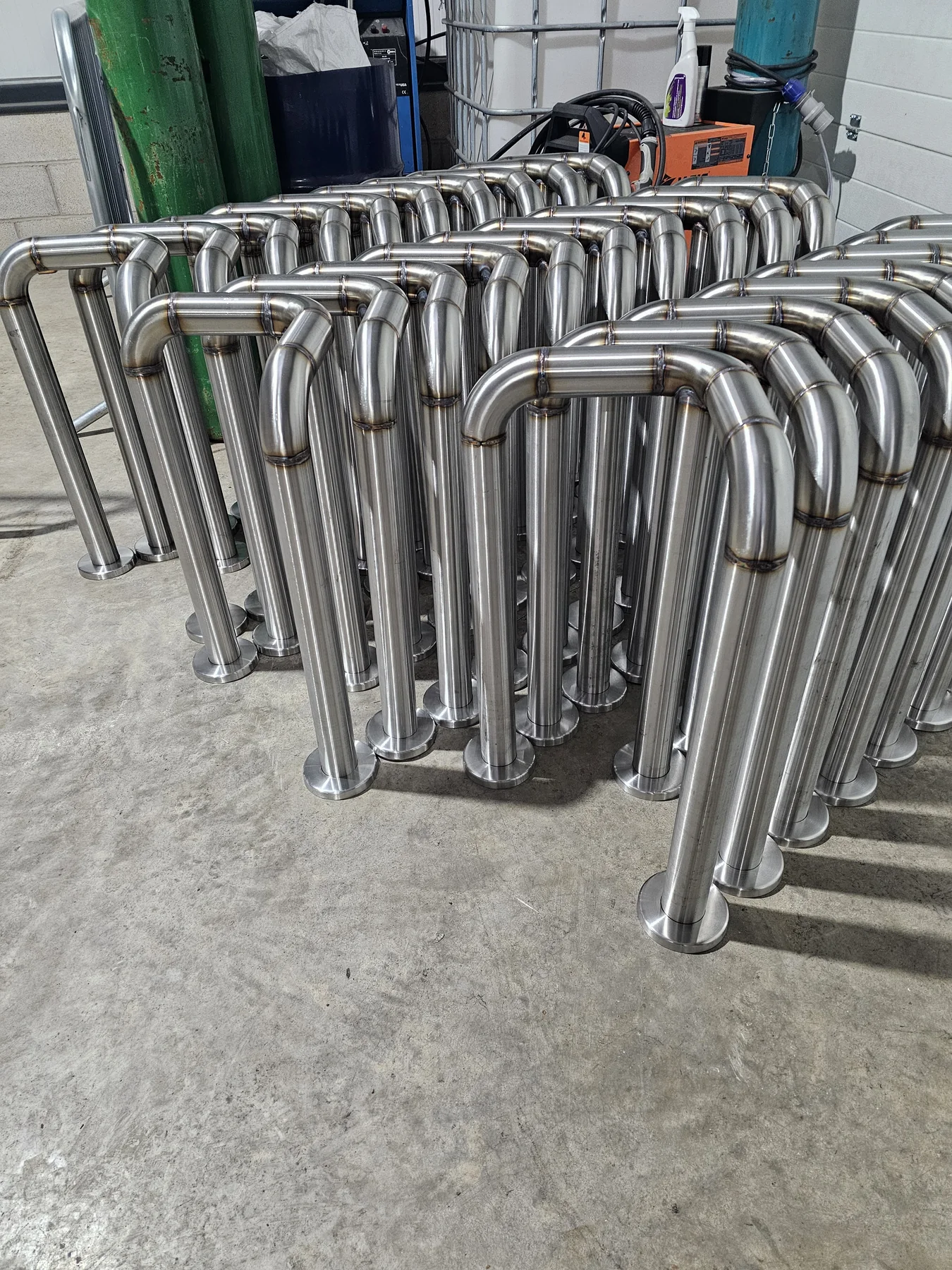
The coloured band that can appear beside a stainless weld is an oxide layer formed as the steel is heated in the presence of oxygen. The colour can range through pale straw, darker yellow, purple and blue depending on several variables. It is not a reliable thermometer on its own because composition, atmosphere, time and original surface finish all affect the appearance.
BSSA guidance explains that heat tint represents a change to the surface oxide condition. Where corrosion resistance matters, visible heat tint is normally removed as part of good post-weld practice.
Why the final duty of the component matters
A decorative internal guard, a food-contact component, an outdoor fabrication and process equipment can all have different finishing requirements. The drawing or specification should therefore state the condition required after welding rather than leaving “finish as necessary” to interpretation.
Visible TIG weld or dressed weld?
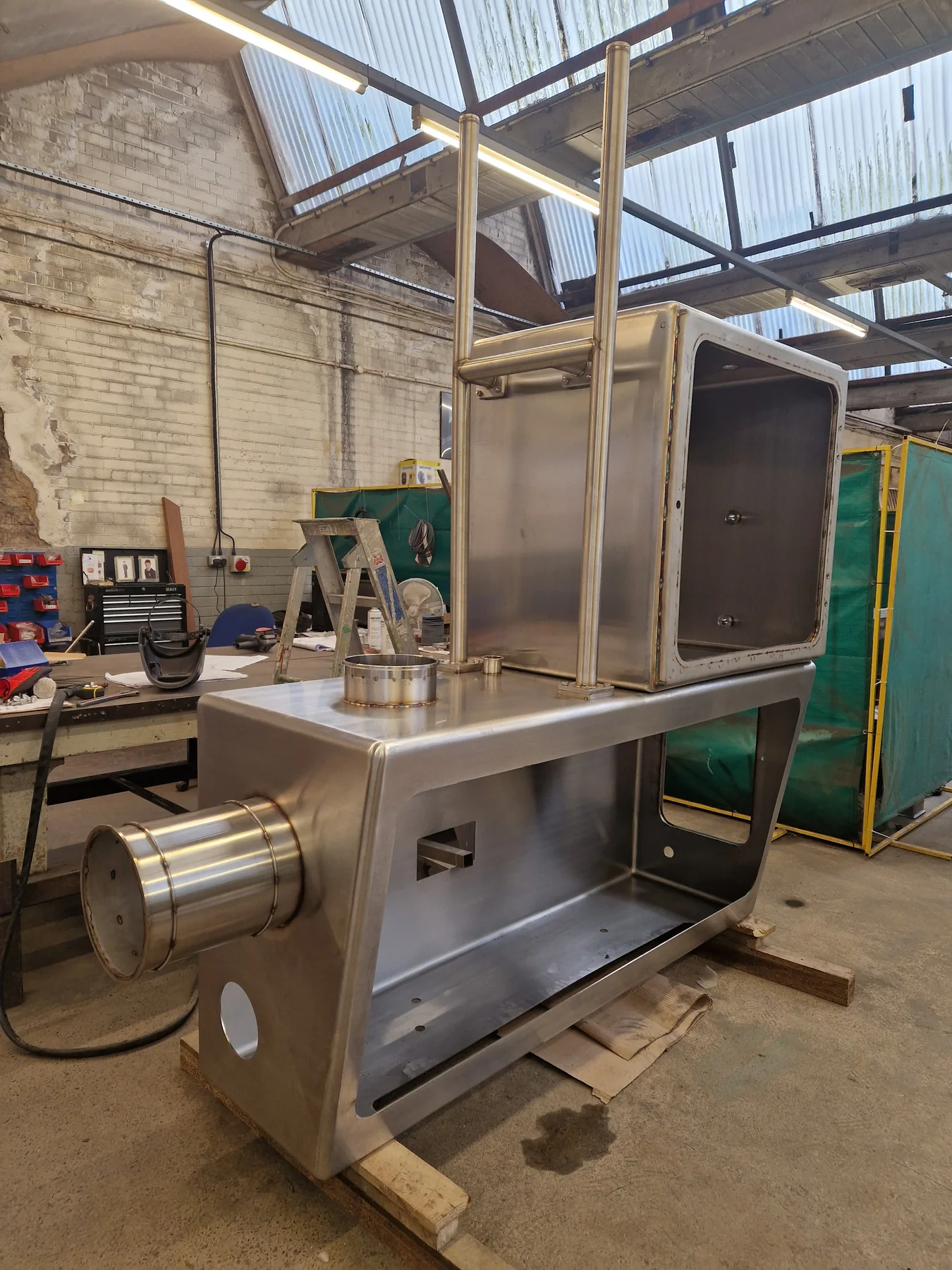
Both can be legitimate requirements. A neat TIG bead may be intentionally left visible. On other work, the weld may need to be dressed flush and blended into the surrounding surface. The second option involves more finishing work and needs enough material and access to achieve the required appearance.
If appearance matters, mark it on the drawing. Do not assume “TIG welded” automatically means “weld completely invisible after polishing”.
Why shielding and heat control matter
Stainless steels conduct heat differently from carbon steel and austenitic grades also have relatively high thermal expansion. BSSA notes that this combination makes distortion control important during welding. Joint fit-up, tacking sequence, fixturing and heat input are all part of producing an accurate fabrication.
Post-weld cleaning versus cosmetic polishing
These are related but not identical goals. Post-weld cleaning aims to leave the stainless surface in an appropriate condition after welding. Cosmetic polishing aims to create a defined appearance. A component may need both.
Mechanical dressing can alter grain and reflection. Chemical or electrochemical treatment can alter appearance as well. The finishing route therefore has to be chosen around the service requirement and the specified final surface.
Heat tint is not the only contamination risk
Carbon-steel particles transferred from shared tools, benches or grinding debris can cause later rust staining on stainless surfaces. BSSA guidance specifically recommends preventing iron contamination throughout storage, handling and fabrication. Clean abrasives and sensible separation of stainless work from carbon-steel contamination are part of good practice.
What to specify for a welded stainless fabrication
- Stainless grade and thickness
- Joint and weld requirements
- Whether welds remain visible or are dressed
- Required final surface finish
- Visible/cosmetic faces
- Grain direction where relevant
- Any process, hygienic or corrosion-performance requirements
- Inspection or documentation requirements
What Zeus needs to quote TIG plus finishing
Send the complete drawing rather than asking separately for “TIG welding” and then “polishing”. Zeus can then consider access, sequence, weld location and final surface together. For matching an existing finish, attach close-up photographs or provide a sample if practical.
Sources and further technical reading
This guide was checked against BSSA technical guidance on post-weld cleaning and finishing, avoiding distortion during stainless welding and iron-contamination prevention.
Frequently asked questions
What causes rainbow colours around a stainless TIG weld?
They are heat tint: a thickened oxide layer formed when stainless is heated in the presence of oxygen. The exact colour depends on several factors and should not be used as a precise temperature measurement.
Does every stainless TIG weld need to be polished flat?
No. Some jobs intentionally retain a neat visible weld; others require the weld to be dressed and blended. The drawing should state the required final condition.
Can carbon-steel grinding dust make stainless rust?
Yes. Iron contamination from shared tools, benches or grinding debris can cause rust staining on stainless steel, which is why clean handling and segregation matter.
Have a fabrication to price?
If this guide relates to a live job, send the drawing, material, thickness, quantity, finish, delivery postcode and required date. Zeus can then review the actual manufacturing requirement.
Send us your drawing